
When someone sends a simple “Sup,” it may seem like a basic greeting, but it opens the door to countless conversation possibilities. Whether you’re texting a friend, crush, coworker, or someone new, the right response can set the tone and make you stand out.
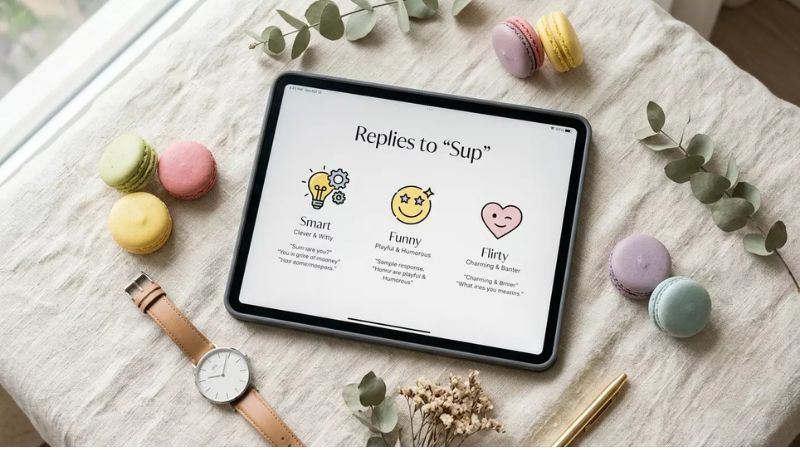
Finding the best reply to “Sup” depends on the situation and the impression you want to make. A smart response can keep the conversation flowing, a funny one can spark laughter, and a flirty one can create instant chemistry. The key is matching your reply to your personality and the relationship you have with the other person.
This guide features the best replies to “Sup” for every mood and occasion. From witty comebacks and playful responses to charming and confident answers, you’ll find plenty of ideas to help you respond naturally and keep the conversation interesting.
Definition and slang origin of “sup”

- Shortened form of “What’s up?” which itself evolved from “What is happening?”
- Originated in African American Vernacular English (AAVE) before spreading mainstream
- Gained widespread use in the 1990s through hip-hop culture and youth slang
- First appeared in print dictionaries around the early 2000s as informal slang
- The double contraction “what’s up” → “wassup” → “sup” shows natural language compression
- Popularized globally by the iconic 1999 Budweiser “Wassup” commercial
- Now used across cultures, ages, and even in professional-casual digital communication
Different Meanings Based on Tone and Context
- Said flatly in text: a low-effort check-in with no real urgency behind it
- Said with enthusiasm (e.g., “SUP!!”) signals excitement at seeing someone
- From a crush or romantic interest, it often signals they’re thinking about you
- From a close friend, it’s a comfortable, habitual greeting requiring little response
- From someone you haven’t heard from in a while, it can signal they need something
- In group chats, it functions more as an announcement of presence than a question
- Paired with an emoji it shifts tone dramatically — “sup 👀” vs “sup 😊” are very different
Why People Use “Sup” Instead of Full Sentences
- Typing efficiency — it requires minimal keystrokes and zero punctuation decisions
- It removes vulnerability by keeping the opener vague and noncommittal
- Leaves the door open without fully walking through it — plausible deniability socially
- Mirrors the casual, low-pressure norms of modern texting culture
- Works as a feeler message to test if someone is available or in a good mood
- Avoids the formality or pressure that comes with “Hey, can we talk?”
- Younger generations increasingly prefer brevity as a social signal of coolness
The Psychology Behind “Sup” Messages
Low-Effort Texting and Social Behavior
- Reflects the paradox of hyper-connectivity — more contacts, less effort per contact
- Psychologists call this “ambient awareness” — maintaining ties with minimal investment
- Low-effort texts keep relationships warm without demanding emotional labor
- It’s a social ping, similar to liking a post — acknowledging without committing
- Habitual texters use “sup” as a reflex, not a deliberate conversational choice
- Can signal comfort and trust — you only send “sup” to people you’re relaxed with
- Research on digital communication shows brevity is increasingly equated with confidence
Hidden Intentions Behind a Simple “Sup”
- Often masks loneliness — the sender wants connection but doesn’t know how to ask
- Can be a soft launch for asking a favor without seeming too forward
- Romantic interest frequently hides behind “sup” — it’s low-risk flirting
- Sometimes it’s genuine boredom with no deeper meaning whatsoever
- A late-night “sup” almost always carries a different subtext than a morning one
- It can be a peace offering after conflict — a way to reconnect without apologizing directly
- Serial “sup” senders may be testing who responds fastest or who’s most available
What “Sup” Says About the Sender
- Signals they value the relationship enough to reach out, but not enough to craft a message
- Often indicates an extroverted, laid-back personality comfortable with ambiguity
- Can reflect emotional avoidance — keeping things surface-level feels safer
- People with high social confidence tend to use “sup” without overthinking it
- A very frequent “sup” texter may struggle with initiating deeper conversations
- It shows they view the relationship as casual enough for minimal formality
- In some cases, it reveals poor texting habits rather than any specific intention
How Perception Changes Your Response
- If you like the person, “sup” feels exciting; if you don’t, it feels annoying — same word
- Your history with the sender completely reframes what “sup” means to you
- Overthinking a “sup” is a sign you have emotional stakes in that relationship
- Responding warmly rewards the behavior; responding coldly trains them to do more
- Your response time communicates as much as your actual words
- Choosing a funny reply signals you’re fun; choosing a deep reply signals you want more
- People often respond based on who they want the sender to be, not who they are
How Do You Respond to “Sup”? (Quick Strategy Guide)
Matching Tone and Energy
- Mirror their energy first — a one-word “sup” deserves a one-word or short reply
- Avoid over-responding with paragraphs when someone sent you three letters
- If they seem hyped, match with enthusiasm: “Not much, you seem excited though?”
- If the tone is flat, a neutral “nm, you?” keeps things balanced and natural
- Energy mismatch creates awkwardness — don’t perform excitement you don’t feel
- Matching tone builds subconscious rapport and makes conversations flow easier
- You can gradually escalate energy once a back-and-forth rhythm is established
Choosing Between Casual, Funny, or Flirty

- Casual: “Nm, just chilling” — safe, universal, keeps the door open
- Funny: “World domination, you?” — shows personality and invites laughter
- Flirty: “Thinking about you, actually” — bold, direct, works if there’s chemistry
- Read the relationship before choosing: flirty with the wrong person backfires badly
- Humor is the most versatile option — it works in almost every “sup” scenario
- Funny replies make you memorable; casual replies keep you safe but forgettable
- You can layer tones: “Not much, sadly 😂 — you saving me from boredom?” is all three
When to Keep It Short vs. Start a Conversation
- Keep it short when you’re genuinely busy and don’t want to open a long thread
- Keep it short when the relationship is purely casual and depth isn’t the goal
- Go longer when you actually want to talk and “sup” is just their awkward opener
- A follow-up question after your reply signals you want more than a one-exchange close
- If you want conversation, add something talkable: “Nm, just watched the weirdest thing”
- Short replies close loops; open-ended replies invite the next message
- You control the conversation depth with every response you send
Turning a Dry Message into Engagement
- Reframe the “sup” as an invitation, not a dead end — you have permission to be interesting
- Ask a specific question: “Honestly? Debating dinner. What would you pick, tacos or ramen?”
- Share something small about your day to give them something to respond to
- Use callbacks to past conversations — “Still thinking about what you said last week”
- Drop a mildly controversial opinion to spark debate: “Hot take incoming if you’re up for it”
- Send a relatable meme or reaction image — visual humor breaks dry text energy fast
- The golden rule: whoever adds more value to the exchange usually steers the conversation
Best Replies to “Sup” (All Situations Covered)
Casual Replies to “Sup”
- Not much, just vibing
- Same old, same old
- Just chilling, nothing crazy
- Nm, how about you?
- Lounging around honestly
- Just got done with stuff
- Pretty low-key day over here
- Hanging in there, you?
- Nothing worth writing home about
- Just existing at full capacity
- Kinda just floating through the day
- All good on my end
Funny Replies to “Sup”
- World domination, the usual
- Just talking to my plants again
- Pretending to be productive
- Aggressively doing nothing
- Staring at the ceiling philosophically
- Living my flop era with confidence
- Contemplating if cereal counts as soup
- Professionally overthinking since birth
- My cat judged me again, so that happened
- Failing at adulting spectacularly
- Accidentally became a snack hoarder today
- Questioning every decision I’ve ever made
Flirty Replies to “Sup”
- Just thinking about you, actually
- Better now that you texted
- My day just got a little more interesting
- Waiting for someone fun to text me — and here you are
- Not much, but you can change that
- Just here hoping you’d reach out
- Smiling now, thanks for that
- You always text at the perfect time
- Nothing, want to fix that?
- Lowkey been thinking about our last convo
- Just here, wishing you were too
- You’re the best part of my notifications
Witty & Smart Replies to “Sup”

- Entropy, mostly
- The ceiling, if I’m being precise
- Atmospheric pressure, approximately 101 kPa
- My stress levels, steadily and consistently
- Opportunity costs of not napping
- The collective existential dread of a Tuesday
- Supply and demand for my attention
- Gravity’s still working, confirmed
- My cortisol and my ambitions simultaneously
- The irony of being busy doing nothing
- Just finished outsmarting myself again
- Cognitive dissonance, but make it casual
Short & One-Word Replies to “Sup”
- Nm
- Vibing
- Existing
- Tired
- Decent
- Surviving
- Chillin
- Good
- Busy
- Floating
- Same
- Here
Cool & Confident Replies to “Sup”
- Living well, can’t complain
- Just out here doing my thing
- Better than yesterday, always
- Focused and unbothered honestly
- Thriving quietly on my own terms
- Exactly where I need to be
- Just leveling up as usual
- Moving at my own pace, feeling good
- Locked in, no distractions
- Cool, calm, and collected as always
- Low-key winning today
- Doing me, and it’s going great
Cute & Sweet Replies to “Sup”
- Hii! Just missing you a little 🥺
- Not much, but happy you texted!
- Just thinking happy thoughts
- My day got cuter now, hi 🌸
- Smiling because you checked in
- Just here being soft and cozy
- Aww, you thought of me!
- Nothing much, just being a little shy
- Your timing is honestly adorable
- Just here, warm and fuzzy vibes only
- Felt a little lonely, glad you texted
- You make even “sup” feel sweet
Playful & Teasing Replies to “Sup”
- Oh NOW you text me, interesting
- Took you long enough honestly
- Sup yourself, stranger
- Barely surviving without your attention
- You always say “sup” like you’re not obsessed with me
- Finally remembered I exist, huh?
- Bold of you to slide in like this
- Oh so now we’re talking? Okay then
- I was JUST about to text you, suspicious
- You and that one-word message, a love story
- Classic you, always keeping it minimal
- Thought you forgot about me — almost believed it
Sarcastic Replies to “Sup”
- Oh you know, curing world hunger
- Just won three Grammys, the usual
- Living my absolute best fictional life
- Discovered a new planet, pretty busy
- Nothing, just wrote a bestselling novel
- Just ran a marathon in my imagination
- Peaked emotionally at 9am, it’s been downhill
- Got a standing ovation from my houseplants
- Just turned down a yacht offer, boring day
- Saved the world before breakfast again
- Oh nothing, just became incredibly fascinating
- Totally thriving in all visible ways
Deep & Thoughtful Replies to “Sup”
- Thinking about how fast time actually moves
- Wondering if I’m growing or just changing
- Sitting with some heavy thoughts lately
- Reflecting on what actually matters to me
- Questioning what “fine” even means anymore
- Just grateful to be breathing honestly
- Thinking about people I should call more
- Realizing how much I’ve been overthinking
- Processing some things I can’t quite name
- In a weird but honest headspace right now
- Just trying to be more present today
- Feeling the weight of small beautiful things
Energetic & Excited Replies to “Sup”
- DUDE so much, where do I start?!
- SO much is happening right now omg
- Just had the best idea ever, listen
- On a total high today, everything’s clicking
- Can’t stop smiling and I’ll tell you why
- Just got the best news, perfect timing!
- Running on pure hype energy today
- Everything is going right and it feels wild
- Literally buzzing, you caught me at peak energy
- I have SO much to tell you honestly
- Today slapped and I need to debrief
- You texted at the most chaotic time, perfect
Chill & Relaxed Replies to “Sup”
- Just easy-breezing through the day
- No complaints, just coasting honestly
- All quiet on my end, peacefully
- Just sipping something warm, nothing more
- Taking it slow and it feels right
- Super low-key, loving every second
- Unbothered and at full peace today
- Just in my calm era, truly
- Nothing loud happening, just stillness
- Easing through the day without a rush
- Totally at ease, no stress whatsoever
- Soft day, gentle vibes, highly recommend
Meme & Trendy Replies to “Sup”
- Not me, that’s for sure 💀
- POV: you have no idea what I’ve been through
- This is fine 🔥🐶🔥
- Slay I guess?? Idk anymore
- Understood the assignment, barely
- It’s giving “technically survived”
- We don’t talk about it
- Living that main character life unironically
- No thoughts, head empty, just vibes
- Gatekeeping my mental state rn honestly
- That’s a whole TED talk you’re not ready for
- Era-defining chaos, but make it aesthetic
Creative & Unique Replies to “Sup”
- Chapter 4 of today just started, it’s weird
- Currently in the B-plot of my own life
- My main character arc just hit a plot twist
- Manifesting aggressively between snack breaks
- Somewhere between “fine” and “a short film”
- Writing the sequel to yesterday’s disaster
- Living in a genre I haven’t named yet
- Narrating my own life in third person today
- Plot armor activated, having a moment
- Somewhere between a vibe and a fever dream
- Today has no genre, it’s experimental
- Crafting memories no one asked for
Bold & Savage Replies to “Sup
- More than you can handle, probably
- Everything you missed by not texting sooner
- Living rent-free in your head apparently
- Oh so now you’re curious about my life?
- Better than whatever you expected
- Not waiting around, if that’s what you thought
- More unbothered than ever, thanks for asking
- Busy being everything you didn’t expect
- Winning quietly while you slept on me
- Glowing up with or without this conversation
- Not available for half-effort anymore
- Exactly what you should’ve texted first
Polite & Respectful Replies to “Sup”
- Hello! Doing quite well, thank you
- Hi there, hope you’re doing well too
- Not much, just going about my day
- Doing well, appreciate you checking in
- All good here, thanks for reaching out
- Pretty good day overall, yourself?
- Keeping busy but in a good way
- Doing well and hoping the same for you
- Nothing major, just a steady day
- Good, thank you — how are things with you?
- Moving along well, hope you are too
- Fine, thanks — always good to hear from you
Dry but Effective Replies to “Sup”
- Stuff
- The usual chaos
- Things, mostly
- Existing with mild success
- Nothing worth a paragraph
- The same things, differently
- Just here
- Not enough, not too much
- Managed to show up today
- Life, apparently
- The bare minimum, successfully
- Still here, which is something
Question-Based Replies to “Sup”
- Not much — you finally free to talk?
- Nm, you got something on your mind?
- Just chilling — what’s going on with you?
- Nothing crazy — did something happen?
- Pretty quiet — you good though?
- Lowkey bored — got a story for me?
- Not much — you need something or just saying hi?
- Same as always — you okay?
- Nothing wild — what made you text?
- Decent day — anything fun on your end?
- Surviving — did you have a good one?
- All good — you’ve been on my mind, what’s up?
Conversation-Starting Replies to “Sup”
- Nm but I literally have to tell you something
- Just realized something kind of crazy today
- Dude I was JUST thinking about you
- Not much, but I watched something wild yesterday
- Nothing huge but I’ve been in my head lately
- Lowkey had the most chaotic day, asking for a reason?
- Same old but I have a random question for you
- Chilling — okay real talk, can I vent for a sec?
- Pretty good, actually something funny happened
- Nothing much, but we need to catch up properly
- Just here — I feel like we haven’t really talked in ages
- Surviving — okay I need your honest opinion on something
Best Overall Replies That Always Work
- Nm, just here — what about you?
- All good, you good?
- Chilling, you caught me at a good time
- Living, breathing, the whole deal
- Not much, but glad you texted
- Same energy you sent, tbh
- Honestly? Better now
- Just here doing me — what’s going on?
- Nothing and everything at once
- Low-key good day, can’t complain
- Surviving and occasionally thriving
- Not much — but let’s make it something
How to Respond to “Sup” in Different Situations
The way you respond to “sup” is never one-size-fits-all — context is everything. A “sup” from your best friend at noon hits completely differently than one from your ex at midnight, and your reply should reflect that difference. Every situation carries its own unspoken rules, emotional stakes, and social expectations. A close friend deserves your unfiltered, casual self. A crush deserves something warm but measured. A coworker deserves professionalism even inside a casual opener.
Reading the situation correctly before you type a single word is the most important texting skill you can develop, and it starts with asking yourself three simple questions — who is this person, what do they likely want, and what do I actually want from this exchange?Once you understand the context, your reply almost writes itself. Casual situations call for casual energy — light, easy, and pressure-free. Romantic situations call for replies that are warm without being desperate, interested without being overwhelming.
Replying to “Sup” from a Close Friend
- Just fire back with equal chaos — “bro WHERE have you been”
- No need to filter yourself, match their exact unhinged energy
- Use inside jokes immediately to skip the small talk entirely
- This is your green light to vent, overshare, or be completely unserious
- A simple “nm u” works perfectly because the friendship needs no performance
- Roast them a little — close friends expect and appreciate the light shade
- Feel free to completely ignore “sup” and just send a random meme instead
Replying to “Sup” from a Crush
- Don’t over-respond — a cool, short reply is more attractive than a paragraph
- Show mild interest without giving everything away immediately
- “Better now” is one of the most effective low-key flirty replies you can send
- Ask them something light back to keep the momentum going naturally
- Don’t respond instantly every time — a little delay protects your energy
- Let your personality show in one sentence rather than trying too hard
- Leave something unanswered so they have a reason to keep texting you
Replying to “Sup” from Someone You’re Dating
- Be warm and engaged — they texted because they want to connect with you
- This is a good moment to share something real about your actual day
- A cute callback to something you two recently shared deepens the bond
- Use it as a soft opener to make plans or suggest something together
- You can be openly affectionate here — no need to play it cool anymore
- A quick voice note instead of text makes the reply feel more intimate
- “Thinking about you” lands differently when there’s already real connection
Replying to “Sup” from an Ex
- Pause before replying — ask yourself honestly why they’re reaching out
- A neutral, unbothered reply protects your peace and signals growth
- “All good” communicates you’re fine without opening emotional doors
- Don’t match nostalgia or warmth unless you truly want to go there
- Avoid questions back if you’re not interested in a full conversation
- Keep it short, kind, and final — no need for coldness or drama
- Your reply sets the tone for whatever this is, choose it consciously
Replying to “Sup” from a Coworker or Boss
- Keep it professional — “Hey, doing well! What’s up?” covers everything
- If it’s a boss, reply promptly and signal you’re available and present
- Avoid slang or casualness that might blur professional boundaries
- “All good on my end, you need anything?” is safe, warm, and effective
- Don’t overshare personal details even in a casual work text exchange
- Match their energy — if they’re being friendly, light warmth is fine
- Always leave the door open for them to state their actual reason for texting
Replying to “Sup” from a Stranger
- A simple “Hey, do I know you?” is perfectly reasonable and direct
- Keep the energy neutral until you understand the context of their message
- Don’t offer personal information before knowing how they got your contact
- A brief, friendly reply is fine but don’t feel pressure to engage deeply
- Trust your gut — if it feels off, a short response or no response is valid
- “Hey, who’s this?” is direct, polite, and completely appropriate to ask
- You owe no warmth or energy to someone whose intentions you don’t know
Replying to “Sup” in Group Chats
- A fun GIF or meme often hits better than a typed reply in group settings
- “Sup everyone” acknowledges the group without singling anyone out
- Use it to drop a topic starter if the chat has been quiet lately
- Reacting with an emoji counts as a reply when you have nothing to add
- A funny one-liner gets the most engagement and keeps the group alive
- Don’t reply if you genuinely have nothing — silence in groups is totally fine
- Use the moment to share news, a link, or something that sparks group talk
Replying to “Sup” Late at Night
- “Can’t sleep either?” is relatable, warm, and opens the door naturally
- A late-night “sup” almost always means something more — reply with care
- If you’re not interested, a brief “Heading to sleep, talk tomorrow” is clean
- “You okay?” is a simple check-in that shows you noticed the unusual timing
- Match the energy carefully — late night “sup” can go deep or get awkward fast
- “Sup yourself, night owl” is playful and keeps things light without committing
- If you want the conversation, lean in — late-night chats often become the best ones
Replying to “Sup” in the Morning
- “Morning! Just waking up” is honest, warm, and sets a friendly tone
- A morning “sup” usually signals they thought of you first thing — that matters
- Keep it light and easy — nobody wants intensity before coffee
- “Sup, just making coffee — you’re up early” is casual and conversational
- Use it as a soft chance to set plans or check in about the day ahead
- A cheerful, brief reply starts both your days off with positive energy
- “Morning person or couldn’t sleep?” is a fun way to flip it back on them
Replying When You Don’t Want to Talk
- A simple “Hey, not really up for chatting rn” is honest and totally valid
- “All good, just need some quiet time today” sets a boundary without coldness
- You don’t owe anyone a full explanation for not wanting to engage
- A delayed reply naturally communicates you’re not available without saying it
- “Kinda in my head rn, talk soon though” is kind and closes the loop gently
- One-word replies like “tired” or “nm” signal low energy without being rude
- Putting your phone down is a completely acceptable and healthy non-reply
How to Make Your “Sup” Reply Stand Out
Using Humor Effectively
- A completely unexpected answer like “Just filed for emotional bankruptcy” always lands
- Self-deprecating humor is universally relatable and instantly likeable
- Absurdist replies work best when your humor style is already established with them
- Timing matters — a funny reply to a late-night “sup” hits differently than a morning one
- Avoid trying too hard; the best funny replies look effortless and spontaneous
- A well-placed callback to a previous joke shows you pay attention and remember
- One punchy line beats three attempts at being funny every single time
Adding Personality and Originality
- Generic replies are forgettable — one specific detail about your day makes you memorable
- Your texting voice should sound like you, not like a template someone copied
- Originality doesn’t mean weird — it means genuinely personal and unscripted
- Reference something only the two of you would understand to stand out instantly
- Avoid filler phrases everyone uses — find your own version of common replies
- Confidence in your own voice is the most attractive quality in any text exchange
- The goal isn’t to impress — it’s to be so authentically you that they want more
Using Questions to Keep Conversation Going
- A good follow-up question turns a dead-end reply into a full conversation
- Ask something specific, not vague — “What are you up to?” beats “How are you?”
- Questions that invite opinions keep people more engaged than yes/no questions
- “Random but —” is a great opener that signals something interesting is coming
- One well-placed question is stronger than three questions fired at once
- Make your question feel like genuine curiosity, not an interview or interrogation
- The best questions come from actually listening to what they’ve already shared
Timing and Texting Strategy
- Responding too fast signals high availability; a slight delay signals high demand
- Late replies aren’t always rude — sometimes they’re a natural boundary setter
- Matching their reply speed builds subconscious conversational rhythm and flow
- Ending a conversation at its peak keeps them wanting more next time
- Don’t always be the one who replies last — balance shows mutual investment
- Read-receipts on or off change the entire psychological dynamic of your texting
- The best texting strategy is consistency — people trust predictable communication patterns
Turning “Sup” Into a Meaningful Conversation
Asking Engaging Follow-Up Questions
- “What’s been the best part of your week so far?” beats “how are you” every time
- Ask about something they mentioned before — it shows you actually listen
- “Okay but real talk — how are you actually doing?” opens deeper doors instantly
- Opinion questions like “hot take: would you rather…” get people talking fast
- “What’s something you’ve been thinking about lately?” invites genuine reflection
- Avoid yes/no questions — open-ended ones keep the thread alive naturally
- “Okay I have a random question for you” is the perfect conversation ignition line
- “If today were a movie genre, what would yours be?” is weird enough to work
- Ask something slightly vulnerable — it gives them permission to be real back
- “What’s the most interesting thing that happened to you this week?” always delivers
- Follow their answer with a reaction first, then your own story — it builds connection
Sharing Something Interesting or Personal
- Drop one specific detail about your day — specificity is what makes stories stick
- “Okay something weird just happened and I have to tell someone” is irresistible
- Share a small win — people love celebrating with others more than they admit
- A half-finished thought like “I’ve been thinking about something lately…” pulls them in
- Vulnerability doesn’t have to be heavy — even “I’ve been in a weird mood” is enough
- Share something you’re genuinely excited about and let that energy come through
- “Random but I just remembered something funny about us” is an instant conversation starter
- Mention something you’re struggling with lightly — it makes you real, not just cool
- A “plot twist in my day” framing makes even boring events sound interesting
- Share an unpopular opinion you actually hold — debate is more fun than agreement
- The best personal shares feel accidental, not like you’re performing for an audience
Using Storytelling in Replies
- Start with the ending first — “So I almost got fired today (not really but almost)” hooks instantly
- Every good text story needs a tiny conflict, even if it’s just “my coffee was wrong”
- Use “okay so” to signal a story is coming — it primes them to pay attention
- Keep it to three beats max: setup, something happened, here’s the twist
- Sensory details make text stories feel vivid — “it was 2am and raining” beats “last night”
- Build suspense with a cliffhanger mid-story: “and then I saw something I didn’t expect”
- End your story with a question so they have somewhere natural to go with it
- The best text stories are ones where you’re slightly the fool — it’s more relatable
- Exaggerate just enough for effect — “I literally died” is understood and appreciated
- A good story makes them feel like they were almost there experiencing it with you
- Stories create shared memory even over text — that’s what builds real connection
Avoiding Dead-End Responses
- “Nm u?” is the equivalent of conversational cement — it goes nowhere fast
- Always leave a hook, a question, or a detail they can grab onto and respond to
- If your reply could end with a period and silence, add one more sentence
- “Same” as a full reply is a conversation killer dressed as an answer
- Reactive replies (“lol”, “haha”, “nice”) invite nothing and build nothing
- Give them something to agree with, push back on, or get curious about
- The two-part reply rule: answer their message, then add something new
- Avoid mirroring their exact energy if their energy was flat and low-effort
- A reply that ends with your own story or take always performs better than a plain answer
- Read your reply before sending — if it sounds like a wall, it probably is one
- The goal of every reply isn’t to close the loop, it’s to gently open the next one
Common Mistakes to Avoid When Replying to “Sup”
Being Too Boring or Repetitive
- Saying “nm u?” every single time trains them to expect nothing interesting from you
- Predictable replies make you blend into the background of someone’s notifications
- If you’ve sent the same reply three times this week, it’s time to switch it up
- Boring replies don’t just kill conversations — they quietly kill interest over time
- “Good” and “fine” are non-answers that communicate you’re not really present
- Repetition signals autopilot, and nobody wants to feel like they’re texting a script
- The bar is low — one slightly original reply makes you stand out from everyone else
- Generic safety replies protect you from awkwardness but also from real connection
- If your reply could’ve been sent by literally anyone, it probably shouldn’t be sent
- Variety in your texting style signals an active, engaged mind worth talking to
- You don’t have to be witty every time — just be genuinely present and it shows
Overthinking Simple Texts
- “Sup” is three letters — it does not require a five-minute drafting session
- Overanalyzing a casual greeting assigns meaning that probably isn’t there
- The longer you wait while overthinking, the more pressure you create for yourself
- Most “sup” messages are sent on impulse — treat them with equal lightness
- Editing a “sup” reply six times is a sign of anxiety, not thoughtfulness
- Trust your first instinct — it’s usually more natural than your tenth draft
- Overthinking leads to over-formal replies that feel stiff and out of place
- Not every text is a test — sometimes people just want to know you’re around
- The irony is that overthought replies often read as less authentic, not more
- A slightly imperfect genuine reply always beats a perfectly crafted robotic one
- Just send the thing — the conversation will correct itself naturally if needed
Misreading Tone and Intent
- Assuming a “sup” means something deep when it’s just a casual check-in creates awkwardness
- Responding with heavy emotion to a light message almost always startles people
- Context clues matter — a 2am “sup” and a 10am “sup” are completely different texts
- Not every “sup” from an ex is an attempt to rekindle — sometimes it’s just habit
- Reading hostility into a neutral message says more about your mood than theirs
- A “sup” from a busy person is a compliment — don’t punish them for its brevity
- Assuming someone wants something just because they texted you is a projection trap
- Tone is nearly impossible to read in three letters — give people the benefit of the doubt
- The safest read of any “sup” is neutral curiosity until proven otherwise
- Misreading intent and responding accordingly can derail a perfectly good conversation
- When in doubt about tone, just reply warmly and let the conversation reveal its own meaning
Coming Off Too Strong or Too Cold
- Responding to “sup” with a paragraph of feelings is almost always too much too soon
- Matching a three-letter message with three sentences is usually the perfect ratio
- Ice-cold one-word replies to someone who genuinely cares will quietly push them away
- Enthusiasm is attractive; desperation reads through the screen and creates distance
- “I’ve been waiting for you to text” might be true but it’s a lot of pressure to put on “sup”
- Coldness as a power move often backfires — it reads as rude, not mysterious
- The sweet spot is warm but unbothered — interested but not hanging on their every word
- Over-explaining or justifying your reply signals insecurity more than you might realize
- Too many exclamation points in a reply to “sup” can feel performative and exhausting
- Disappearing after one exchange without warmth leaves people unsure if you like them
- The best replies feel effortless — like you’re glad they texted but your world didn’t stop
What Your Reply to “Sup” Says About You
Personality signals in texting style
Your texting style is essentially a fingerprint — it reveals how you think, feel, and connect without you ever realizing it.
People who reply with humor signal that they’re socially confident and comfortable enough to not take small moments too seriously.
Someone who always replies with questions is likely genuinely curious by nature and values other people’s inner world over surface-level exchange.
Short, clipped replies often belong to people who are either very busy, emotionally guarded, or simply more comfortable expressing themselves in person.
Warm and expressive texters tend to be high in agreeableness — they prioritize making others feel seen even through a screen.
The person who replies with a story or detail is usually creative, communicative, and someone who finds meaning in even the smallest interactions.
Overtly formal replies to casual messages signal someone still figuring out the social register of digital communication or someone who keeps strict emotional distance.
People who use a lot of humor mixed with self-deprecation tend to be deeply self-aware — they lead with lightness because they’ve already processed the heavy stuff.
Consistent reply patterns reveal character more than any single message — reliability in texting mirrors reliability in real life.
Ultimately, how you reply to something as small as “sup” quietly tells people whether you’re someone worth texting again.
Confidence vs insecurity in replies
A confident texter replies without obsessing over how it will land — they trust their voice and send without editing twelve times.
Insecurity in texting often shows up as over-explaining, excessive qualifiers, or apologizing for things that needed no apology at all.
Confident people don’t chase replies — they send, live their life, and let the conversation return on its own natural timeline.
Replying instantly every single time can signal that you’ve placed this conversation above your own peace and presence.
A secure person can send a funny reply that lands flat and not spiral — they understand that one awkward text doesn’t define the relationship.
Insecure replies often try to do too much — be funny, be deep, be cool, and be available all in one message, which reads as exhausting.
Confidence in texting isn’t about being cold or mysterious — it’s about being genuinely unbothered by outcomes you can’t control.
The need to constantly re-read sent messages is a form of text anxiety that confident communicators gradually learn to let go of.
Secure texters can end conversations without needing the last word, the perfect sign-off, or reassurance that everything is okay.
How you handle being left on read says everything — a confident person shrugs it off, an insecure one rewrites every message they ever sent.
Emotional intelligence in communication
High emotional intelligence in texting looks like reading between the lines — noticing what someone didn’t say as much as what they did.
Emotionally intelligent texters adjust their tone based on the other person’s energy rather than bulldozing through with their own agenda.
Recognizing that a simple “sup” might be someone’s way of reaching out when they don’t know how to ask for connection is pure emotional awareness.
EQ in texting means knowing when to be funny, when to be serious, and when to just say “you okay?” and mean it completely.
People with high emotional intelligence rarely send texts they regret because they pause, consider impact, and then communicate with intention.
The ability to de-escalate tension over text — choosing warmth over defensiveness — is one of the rarest and most valuable communication skills.
Emotionally intelligent people don’t weaponize silence, late replies, or cold responses — they understand that cruelty via text is still cruelty.
Noticing that someone’s texting pattern has changed and gently checking in is a small act of EQ that people remember for a very long time.
The most emotionally intelligent reply isn’t always the cleverest — sometimes it’s just the most honest and present one you could send.
Great digital communicators know that the goal of any text exchange is connection, not performance, and they never lose sight of that.
Expert Insights (EEAT Section)
Communication expert tips on texting
Communication experts consistently emphasize that tone clarity is the single biggest challenge of text-based conversation — when in doubt, lean warmer.
Experts suggest that the best texters treat digital conversation as a two-way street — they give as much energy as they expect to receive back.
Research in communication studies shows that response consistency builds more trust over time than response speed ever could.
According to relationship communication coaches, the most damaging texting habit isn’t being late to reply — it’s being emotionally unpredictable in your replies.
Experts advise against using text for high-stakes emotional conversations — the absence of tone and body language creates too much room for misinterpretation.
Digital communication specialists note that people form lasting impressions from texting patterns within the first few exchanges — first texts matter enormously.
Communication coaches consistently find that people who ask genuine follow-up questions over text are rated as significantly more likeable and trustworthy.
Experts in interpersonal communication recommend treating your texting habits as an extension of your in-person character — the gap between the two creates distrust.
Studies show that people who use someone’s name occasionally in texts create a stronger sense of personal connection than those who never do.
The best communication advice for texting is deceptively simple — be interested, be clear, and be kind, and nearly every exchange will go well.
Psychology-backed reply strategies
Psychological research on reciprocity shows that matching someone’s investment level in texts creates the most balanced and sustainable communication dynamic.
The principle of variable reward — replying enthusiastically sometimes and briefly other times — is psychologically shown to increase engagement and anticipation.
Studies in attachment theory reveal that anxious texters tend to over-communicate while avoidant texters under-communicate, and both patterns create disconnection.
Psychologists note that people associate positive emotions with whoever they were talking to when those emotions occurred — being fun over text builds real affinity.
The “pratfall effect” in psychology suggests that showing a small flaw or awkwardness in your texts actually makes you more likeable, not less.
Research shows that using someone’s name in a text activates a uniquely personal response in the brain — it signals that you see them as an individual.
Psychologists who study digital behavior find that people who text with consistency and warmth are significantly more likely to maintain long-term relationships.
The psychology of scarcity applies to texting — being occasionally unavailable or brief makes your engaged replies feel more valuable by contrast.
Studies on positive reinforcement show that responding to effort with warmth encourages people to keep putting effort into conversations with you.
Psychological research consistently confirms that emotional validation — even a simple “that makes total sense” — is one of the most powerful tools in any conversation.
Building attraction through texting
Attraction over text is built through curiosity — the person who always leaves something slightly unresolved keeps the other person coming back.
Texting experts and dating coaches agree that the biggest attraction killer is being too available too fast — it removes all mystery and perceived value.
Playful teasing done with warmth is one of the most psychologically potent tools for building romantic tension through a screen.
Attraction grows when someone feels genuinely understood — so listening carefully and reflecting that back in your replies is more powerful than any clever line.
Confidence in your texting voice — owning your humor, your opinions, your weird — is consistently more attractive than trying to be what you think they want.
The push-pull dynamic — being warm in one message and slightly elusive in the next — creates the emotional tension that makes people think about you between replies.
Authenticity is the most underrated attraction strategy — people are drawn to texters who feel real rather than those who feel carefully curated.
Shared laughter over text builds intimacy faster than almost any other exchange — funny replies aren’t just entertaining, they’re emotionally bonding.
Attraction is maintained by making people feel good about themselves in your presence — so give genuine compliments, real reactions, and actual attention.
The most attractive quality in a texter is someone who makes the other person feel like the conversation was worth having — leave them better than you found them.
Digital etiquette and boundaries
Reading receipts are a boundary choice, not a social contract — no one is entitled to know exactly when you read their message.
Ghosting after multiple exchanges is widely recognized by communication experts as a form of disrespect — a brief closure message costs almost nothing.
Healthy digital boundaries include not being expected to reply immediately outside of working or agreed-upon hours — availability is not a personality requirement.
Sharing someone else’s texts without their knowledge is a serious breach of digital trust that damages relationships far beyond the original conversation.
Experts in digital etiquette recommend against sending multiple unanswered messages in a row — one follow-up is considerate, three is pressure.
Boundaries around texting frequency should be communicated clearly and early in relationships — assuming everyone shares your texting style creates unnecessary friction.
The etiquette rule most communication professionals agree on is simple — don’t use text to deliver news or have conversations that deserve a real human voice.
Respecting when someone takes longer to reply without punishing them for it is a basic but often overlooked form of digital emotional maturity.
Screenshotting conversations to show others should only ever happen with the explicit understanding that the other person would be completely comfortable with it.
Good digital etiquette ultimately mirrors good human etiquette — be respectful of people’s time, honest with your intentions, and kind even when it costs you nothing.
FAQs
What does “Sup” mean in texting?
“Sup” is a shortened version of “What’s up?” and is commonly used as a casual greeting. It’s usually an invitation to start a conversation.
How should I reply to “Sup” from a friend?
Keep it relaxed and friendly with replies like “Not much, you?” or “Just hanging out.” Simple responses often work best with friends.
What is a flirty response to “Sup”?
You can reply with something playful like “Nothing much, just waiting for your message.” It shows interest while keeping the conversation light.
Can I respond to “Sup” with a joke?
Absolutely. Funny replies such as “The ceiling” or “My stress levels” can make the conversation more entertaining and memorable.
Is “Sup” considered rude?
No, “Sup” is generally a casual and friendly greeting. However, it may be too informal for professional or formal conversations.
Conclusion
A simple “Sup” may only be three letters long, but your response can shape the entire conversation. Whether you choose a smart, funny, flirty, or casual reply, the best answer is one that feels natural and fits the situation.By matching the tone of the sender and adding a bit of personality, you can turn an ordinary greeting into an engaging exchange. Use these ideas as inspiration and make every “Sup” an opportunity to start a great conversation.

- Happy Sunday Blessings: Prayers, Quotes & Wishes for a Peaceful, Joyful Day - September 15, 2026
- 210+ Good Morning Tuesday Blessings, Quotes, prayers, bible verses & images - September 11, 2026
- 90+ Beautiful Good Morning Sunday Blessings, Wishes, Prayers & Quotes with Images - September 11, 2026